
Alan Greenspan’s inconvenient truths about immigrants
He cited the benefits of a robust immigration system to the U.S. economy, taxpayers and Social Security recipients

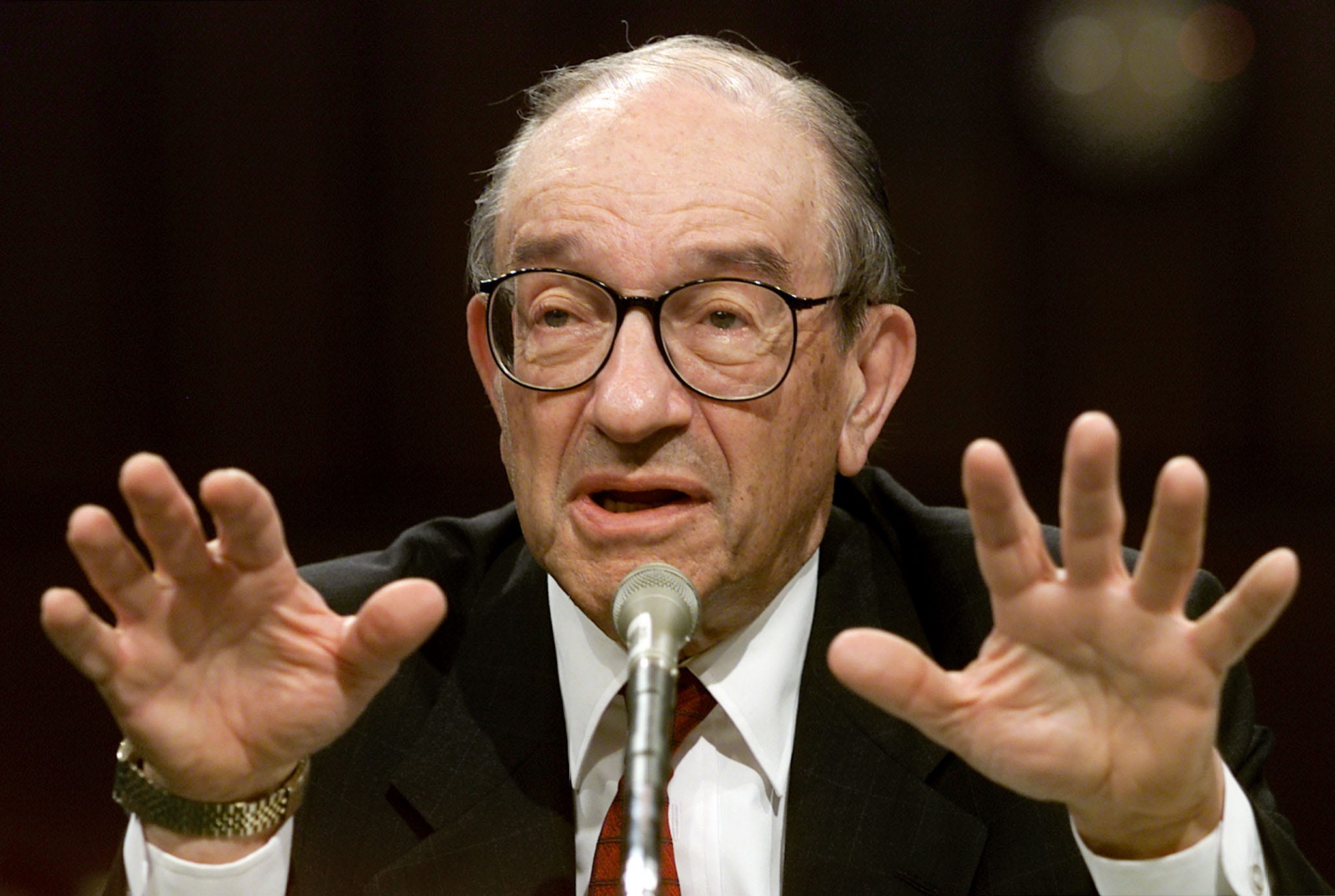
Alan Greenspan, who died this week at age 100, revealed an inconvenient truth to anti-immigrant Republicans and racists elsewhere: Immigrants, including those undocumented, contribute mightily to the American economy, the federal budget and the Social Security system.
Testifying before Congress as Fed chair 25 years ago, Greenspan estimated that undocumented immigrants paid about $70 billion annually in taxes and received about $43 billion in government services, smashing one of the common nativistic myths about immigrants being a drain on American taxpayers.
Greenspan also pointed public attention toward the Social Security system and the vital contributions that immigrants had made there.
In 2005, The New York Times reported that undocumented workers had contributed about $7 billion to the Social Security Administration. This happened because those immigrants had obtained an Individual Taxpayer Identification Number (ITIN) from the Internal Revenue Service.
ITINs have been available, in lieu of Social Security numbers, since the 1990s. With them, undocumented workers pay billions into the SSA and Medicare systems — and they do this despite the fact that many workers who leave the country, of their own will or via deportation, never will collect retirement or health benefits.
This point was affirmed when Stephen Goss, the SSA’s chief actuary, said that, by 2007, the Social Security trust fund had received a net benefit of, at minimum, $120 billion and as much as $240 billion from unauthorized immigrants.
That represented somewhere between 5.4 percent to 10.7 percent of the trust fund’s total assets at the time.
“The cumulative contribution is surely higher now,” wrote Edward Schumacher-Matos in The Washington Post in 2010. “The Social Security trust fund faces a solvency crisis that would be even more pressing were it not for these payments. ‘If, for example, we had not had other-than-legal immigrants in the country,’ Goss said, ‘then these numbers suggest that we would have entered persistent shortfall of tax revenue to cover payouts starting in 2009, or six years earlier than estimated under the 2010 Trustees Report.’”
In 2009, Greenspan warned Congress that steady immigration was necessary for U.S. economic growth.
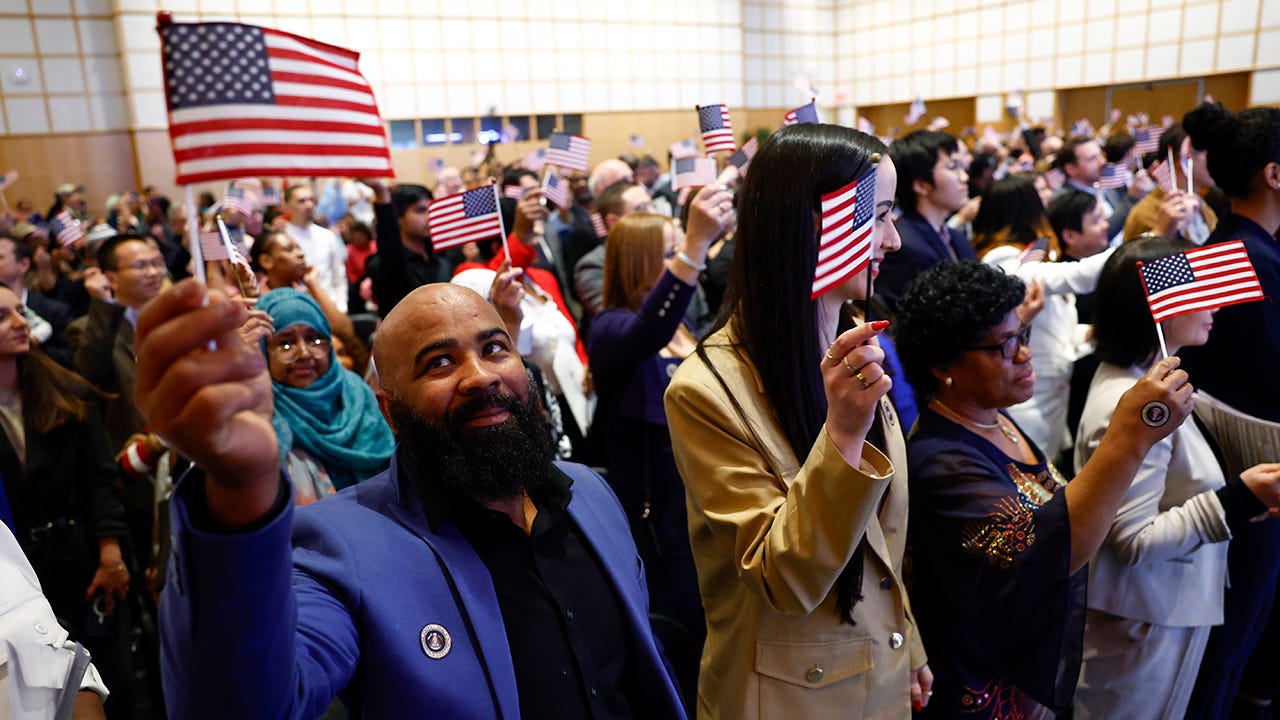
“There is little doubt,” he said, “that unauthorized immigration has made a significant contribution to the growth of our economy. Between 2000 and 2007, for example, it accounted for more than a sixth of the increase in our total civilian labor force. Unauthorized immigrants serve as a flexible component of our workforce, often a safety valve when demand is pressing and among the first to be discharged when the economy falters.”
Greenspan acknowledged the time-worn complaint that the presence of unskilled, undocumented immigrants suppresses the wages of low-skilled, native-born Americans and imposes significant costs on state and local governments.
“However,” Greenspan said, “the estimated wage suppression and fiscal costs are relatively small, and economists generally view the overall economic benefits of this workforce as significantly outweighing the costs.”
But, two decades later, we have an aggressive, nationwide effort to purge the country of people who have made significant contributions to the economy and the nation’s safety net.
It’s not only cruel. It’s stupid.
Cruel plus stupid equals Trump.
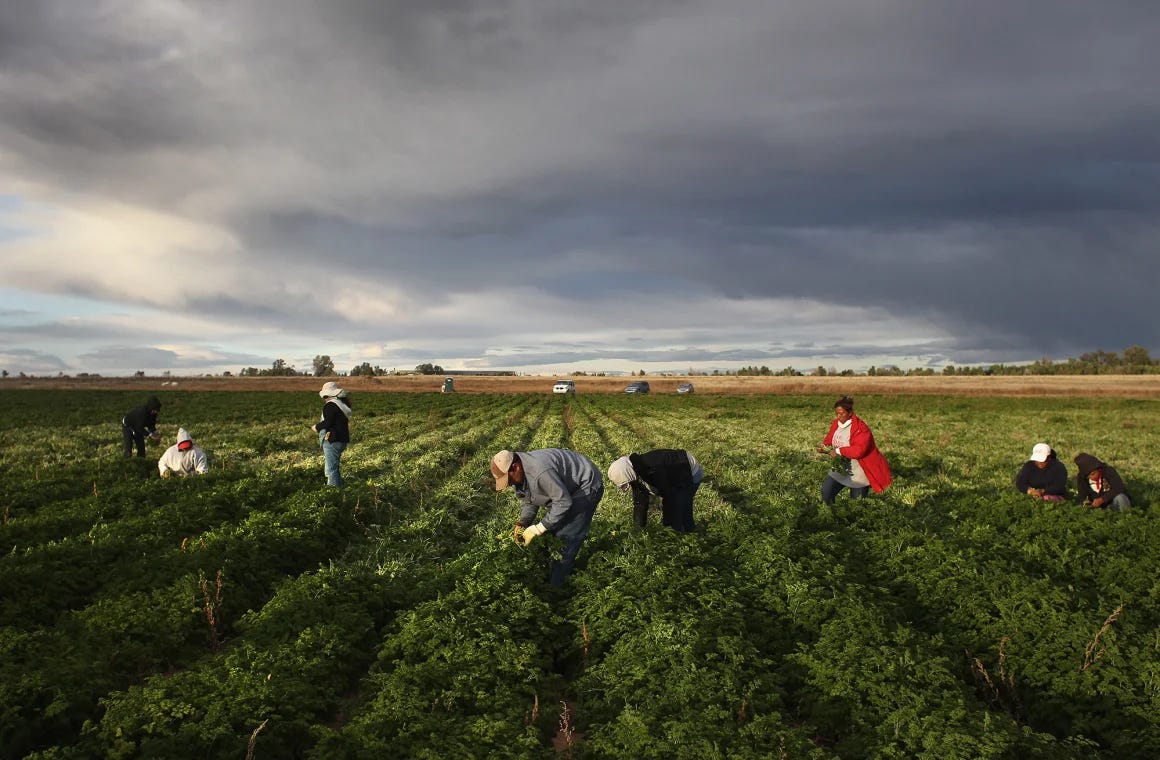
The nonpartisan Congressional Budget Office estimated last year that annual average surges of 200,000 immigrants, both documented and undocumented, would boost GDP by $8.9 trillion during the decade ending in 2034. And the trend Greenspan reported back in 2001 — immigrant contributions to the federal coffers versus costs in government services — continues to hold: We reap far more in revenue from immigrants than they cost us.
While a columnist there, I used to hear frequently from certain Baltimore Sun readers who believed the IRS, SSA and state tax collectors had no business taking revenue from “illegal immigrants” who shouldn’t be in the country to begin with.
It should be illegal to collect taxes from illegals!
But, of course, not one was agreeable to paying more in taxes to make up for the shortfall that would occur if undocumented workers did not exist.
Such is one of the great hypocrisies of the MAGA Americans who favor mass deportation and who oppose any kind of benefits to the undocumented.
Greenspan’s advisories to Congress included a call to expand our reach to highly educated and skilled immigrants.
“Our primary and secondary school systems are increasingly failing to produce the skilled workers needed to fully utilize our evermore sophisticated and complex stock of intellectual and physical capital,” Greenspan said. “This capital stock has been the critical input for our rising productivity and standards of living and can be expected to continue to be essential for our future prosperity. The consequence of our educational shortfall is that a highly disproportionate number of our exceptionally skilled workers are foreign-born. . . . The quantity of temporary H-1B visas issued each year is far too small to meet the need, especially in the near future as the economy copes with the forthcoming retirement wave of skilled baby boomers.”
The number of H-1B visas increased dramatically in the years since then, but Trump and Stephen Miller, architect of the immigrant purge, have made it much tougher — and far more expensive — to get one.
More stupidity: The Trump regime cuts funding for higher learning and dismantles the Department of Education while cracking down on visas for well-educated, foreign-born workers to fill the gaps in our skilled workforce.
When Democrats return to power: Real immigration reform must be a priority: Secure the border and make immigration orderly, but also offer an amnesty program and a path to citizenship to any undocumented immigrants who remain after the Trump purge. We need to end the cruelty, claw back the billions that Republicans have authorized for ICE and make a whole new promise to the world — that the United States is still be a wealthy and powerful nation, but we will again be a decent and humane one.
We are, and always have been, a nation of immigrants. Unless you are a native American, you either are an immigrant or descended from one. That includes those founding fathers who wrote the Declaration of Independence whose 250th birthday we will celebrate July 4th. Most of them were British citizens before they created the country now known as the United States.
The first immigrant in my Dad's family arrived in Massachusetts around 1635. In retirement, my Dad found the gravesites of nearly all the men in his family except for one who was buried at sea. So at least one of them was involved in the maritime industry. Our family's ancestors fought in all of our county's wars including one whom he always called his "crazy great uncle Charlie" who fought in the Spanish American Wars. Mr grandfather worked for the Boston and Maine railroad all of his life. My Dad and his two brothers fought in WWII.
Virtually every American family can chart a similar path from their country of origin to America including black Americans whose ancestors had no choice about coming as slaves. Like today's immigrants, documented or undocumented, those earlier immigrants left the world they knew behind for many different reasons. When they got here, they took whatever jobs they could find, often the menial ones those who had arrived earlier didn't want. They did those jobs so their kids didn't have to. They and their decedents built America, and, on July 4th, we should celebrate them and their contributions.
Yes, we are a nation of immigrants, and Earth is a planet of immigrants. Immigration has a world-wide history, and the causes have varied. Immigration is still a world-wide phenomenon and apparently will increase because of climate change. (I have family members now moving to Canada, where my family came from a century ago). It has social effects as well as economic, and they have driven the recent political argument. The Republican party had been the one favoring immigration until Trump seized on the social aspect, with his innate gift for distortion and crude exaggeration. Incidentally, I have to boast that I once worked with Steve Goss, before he became chief actuary at SSA. He was one of the most industrious and dedicated people I encountered at that peculiar institution.