

Given his impulsive nature, his ridiculously hostile attitude toward Canada, his America Firstiness and his use of the Justice Department against perceived enemies, this seems like a perfect issue for Trump: Curtailing the industrial harvest of menhaden in the Chesapeake Bay and coastal Atlantic.
I know: Expecting Trump to defend a natural resource — in this case, the most important fish in the ocean — seems ridiculous.
But, given the four givens I listed above, you can see why the issue might appeal to him. They’re all the wrong reasons to take action, but that’s exactly how Trump rolls.
A year ago on Truth Social, Trump posted a video that claimed a foreign company with an industrial fishing operation in Virginia needed to be stopped from harvesting menhaden for the Omega-3 market. The company, based in New Brunswick, was taking too much menhaden out of the bay and ocean, conservationists in the video argued, and that left an insufficient amount of forage for the fish, whales, dolphins and birds that need it to survive.
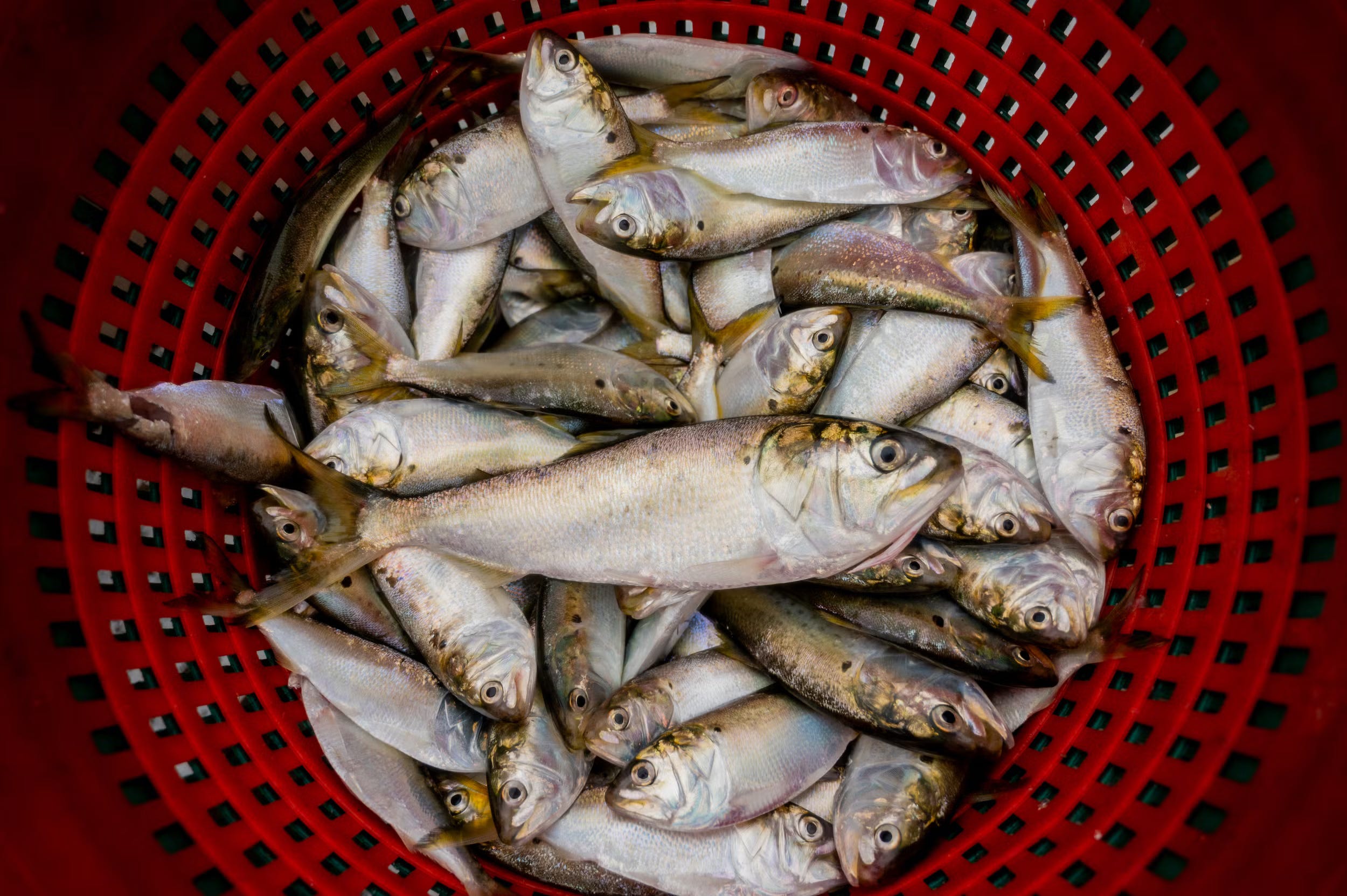
Menhaden, also known as pogie or bunker, is a small, oily fish that swims in massive schools. It has been called the most important fish in the Atlantic because tuna, rockfish (or striped bass), whales and dolphins feed on it. Eagles and ospreys do as well.
One company, operating out of Reedville, Va., takes menhaden by the ton for the “reduction market,” where it’s reduced to over-the-counter fish oil supplements, pet food, livestock feed and feed for farmed fish. It’s big business, with Omega Protein the largest operation left.
Conservationists and recreational anglers argue that menhaden harvesting by Omega Protein, owned by Canada-based Cooke Inc., is in part responsible for declining numbers of rockfish and osprey.
Rockfish numbers have been in a prolonged slump, forcing Maryland to further reduce the recreational fishing season and make off limits the Chesapeake’s prime spawning areas in spring. Meanwhile, osprey chicks are starving at unprecedented levels, according to a recent study cited by the Chesapeake Bay Foundation, raising more concerns that the industrial harvests of menhaden in Virginia have deprived the birds of a primary food source.
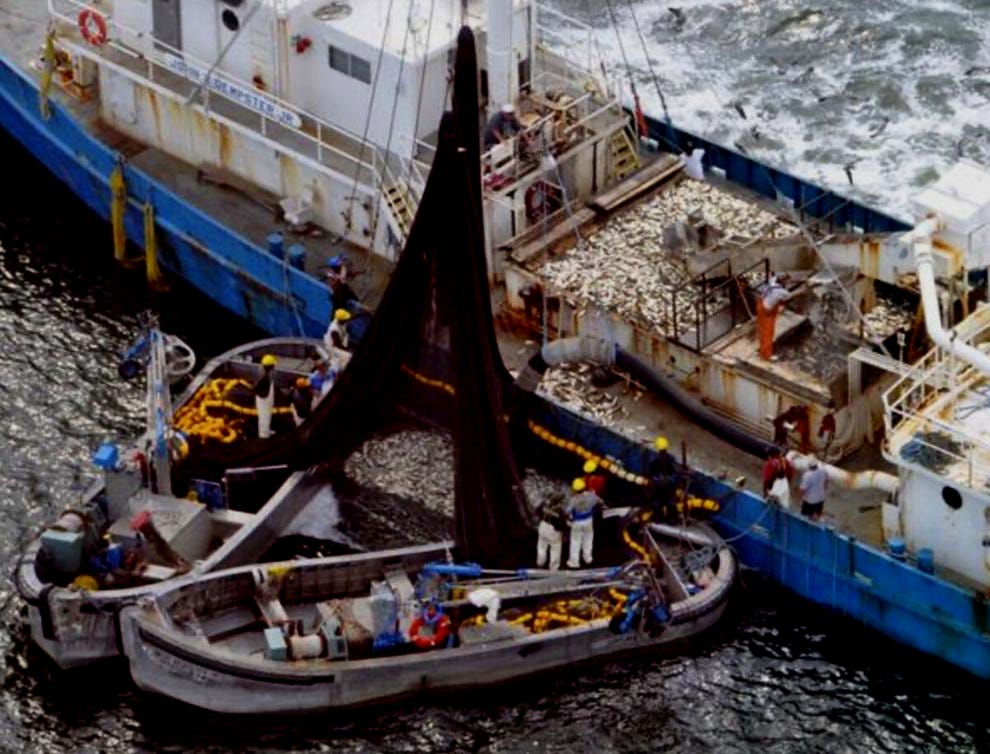
Though regulated by the Atlantic States Marine Fisheries Commission, the menhaden harvest has been the source of debate and controversy for years. The company that does the harvesting says, in following the commission’s limits, it is not harming the fishery. Conservationists say conditions in the Chesapeake and Atlantic suggest otherwise.
Whit Fosburgh, of the Forage Fish Campaign, notes that the ASMFC “botched the science” five years ago, setting limits way too high and causing an overharvest that resulted in a 37% drop in the stock since the last assessment in 2022. That, says Fosburgh, requires a stronger correction than the one the commission ordered last fall. (The current coastwide menhaden catch limit is 412 million pounds annually, down from 515 million pounds.)
The commission did not go far enough, Fosburgh says, negating any real reduction in the harvest.
Also in that camp is Allison Colden, Maryland executive director of the Chesapeake Bay Foundation: “Just as we were confident in increasing the total allowable catch when the science says we should, we need to be as willing to take reductions when the science indicates that that’s warranted.”
The Theodore Roosevelt Conservation Partnership, also advocating for limits on menhaden, says the harvest should be cut by 50% to stop the collapse of the rockfish population on the East Coast: “While anglers in northern Atlantic coastal waters, especially off of New York, observed a robust rise in menhaden and their predators such as striped bass, bluefin tuna and humpback whales for several years, numbers diminished starting in 2024. The previous rise in nearshore fish populations was partly due to coastal protections for these essential forage fish – now implemented by every Atlantic state except Virginia.”
Last year, Virginia sportsmen called on Trump to protect menhaden, and Trump appeared sympathetic. He posted a video in which anglers claimed that Canadians were responsible for the declining populations of menhaden.
As to the Canadian connection to this operation, there was a lawsuit filed in New York over that issue a few years ago, with plaintiffs claiming the companies engaged in the East Coast menhaden industry had not been truthful about the citizenship of their owners. But Ocean Harvesters, the outfit that sells its catch to Omega Protein, argued that it is owned and operated by Americans, and based in Virginia. A judge tossed the lawsuit.
“The court never made a ruling on the merits of the question [of] whether Ocean Harvesters was improperly controlled by a foreign entity,” says Brendon DeMay, the attorney who brought the case. “That issue remains to be resolved.”
Maybe Attorney General Todd Blanche and the Justice Department could resolve it. And then there’s the Cooke connection to Omega Protein. If Trump wants to take his fight with Canada into international waters, there seems to be room for it.
But, who am I kidding?
Whatever instinct Trump had to take executive action on behalf of the menhaden fishery, it has either flown or been talked out of him.
Besides, Trump has bigger fish to fry — his ballroom, his arch, the White House lawn, getting his name undeservedly on an aircraft carrier.
So it will be just as well if conservationists and scientists prevail and reduce the menhaden harvest until we see more rockfish in the Chesapeake, and fewer osprey chicks starving.
Follow the links in this column for more information about the Forage Fish Campaign and the efforts of the Chesapeake Bay Foundation and the Theodore Roosevelt Conservation Partnership. The public is invited to comment on a possible reduction of the menhaden harvest by as much as 50%. The ASMFC expects to make a final decision at its annual meeting in November in Rhode Island.
😭. Trump. Likes shooting fish in a barrel ! Thanks, Dan❣️ So many sad states of affairs!